
What the Lewis County Current Owner Record Shows
An Assessor parcel record ties an owner of record to a tax parcel number. It also assigns the classification. Treat that name as a starting point. The recorded deed is the instrument that actually conveys the interest. So match its grantee against the assessment data before drawing conclusions. One owner field can look complete and still hide liens, easements, mineral interests, or co-owners. The tax roll never lists them.
| Owner name | Name associated with the parcel on the assessment record |
|---|---|
| Vesting | Capacity or form of ownership stated in the deed |
| Mailing address | Destination for assessment or tax correspondence |
| Situs address | Location assigned to the real property |
| Deed reference | Instrument that records the stated conveyance |
| Recording date | Date used to place the instrument in the public record |
Open the Lewis County map-card viewer to connect an owner name with a specific District and Map/Parcel card.
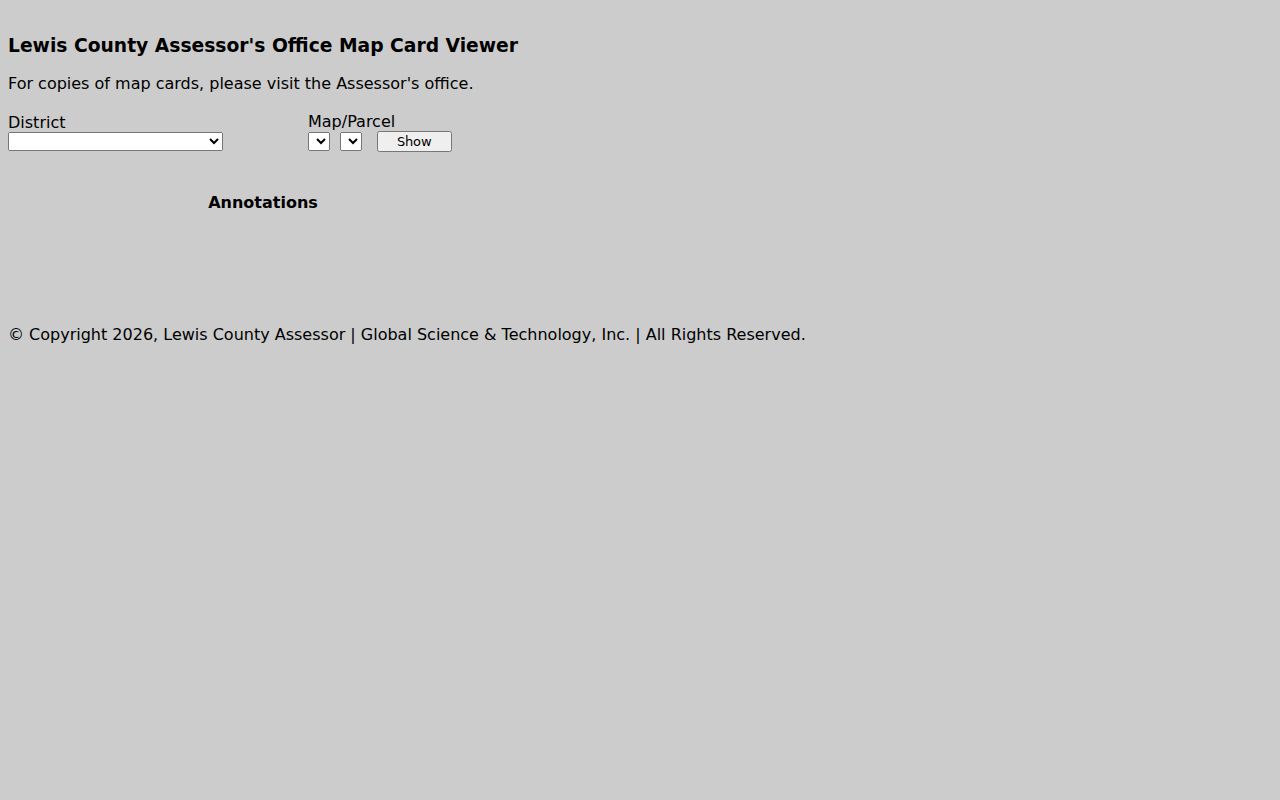
Ownership and occupancy are different things. The mailing address on a parcel record is just where the tax bill goes, which may be a home or business elsewhere, while the situs points to the land itself. Use it as a limited public-record contact clue, and honor any substitute-address protection that applies.
Confirming the Current Owner in Lewis County
Verification means checking two sources against each other. Pull the Assessor's parcel record. Then pull the latest deed in the County Clerk's land-record index. Confirm the legal description matches the parcel. The grantee on the deed should be the same person or entity the tax record shows. Even then, you have not run a full title search. Reservations, other instruments, or unrecorded interests can still affect the land.
- Find the parcel in the Lewis County Assessor's site or map-card viewer and record the displayed owner name and map reference.
- Search the County Clerk's inquiry portal for the most recent deed under the owner name and likely variations.
- Read the instrument's grantee, vesting language, date, and description; compare those details with the parcel.
- If title is held by an entity, verify its legal name in the state registry; do not infer its members from the registered-agent field.
- Owner of record
- The person or entity named in the current property record.
- Vesting
- The way the deed states an interest is held, such as individually or in a named fiduciary or entity capacity.
- Registered agent
- A public contact designated for an entity; this role alone does not identify beneficial owners.
Reaching a Lewis County Property Owner
Need to reach an owner about a parcel? Use the correspondence channel shown in the official record. Keep the message tied to the property. A tax mailing address proves nothing about where someone lives. West Virginia's Address Confidentiality Program gives qualifying participants a substitute address. That protection deserves respect. Never dig through other data sources to work around it.
Respect privacy. Use owner information only for a legitimate property-record purpose. Do not use it to harass, threaten, or intrude on a person, and do not treat an owner-of-record field as permission to contact someone repeatedly.
Start With the Lewis County Assessor's Parcel Record
The Assessor site pairs mapping with map-card access. That makes its parcel record the practical first stop for identifying the current tax owner at a location. Search a known address. Or use the District and Map/Parcel selectors when you have those identifiers. Screens vary. A display may be an assessment card, a map entry, or a tax reference. So read the labels. Save the parcel number and tax year. The deed search that follows then has a fixed target. Remember what the owner field is for: assessment administration. It guarantees neither that no later deed exists nor that every recorded interest is disclosed. A transfer can be recorded before the parcel display catches up, so confirm recent conveyances in the Clerk's land record.
Read Vesting Language in a Lewis County Deed
The grantee line names the party receiving the stated interest. Vesting language goes further. It shows the capacity in which that party takes title. That capacity may be an individual, a trustee, an executor, or an entity. Read the whole deed, legal description and prior-deed references included. Never collapse a multi-party transfer into one name. That name may simply sit on the tax account. If the deed's legal description doesn't obviously match the address, compare district and map data. Check parcel boundaries and any referenced plats too. A map helps you get oriented. The deeded description remains the recorded evidence of what land changed hands.
Verify a Business Listed as the Current Owner
A company on the tax roll or in a deed calls for one extra step. Run the exact business name through the West Virginia Secretary of State search. It returns entity detail and a registered agent. County filters sit in the advanced search. A $10 certificate is available for formal entity information. Business records confirm which legal entity a deed names. They do not prove beneficial ownership or that the entity holds title to the parcel. Keep the two results separate in your notes. The Secretary of State record describes the company. The County Clerk deed describes the real-property conveyance. If names differ, compare the entity number, suffix, and deed date before calling it a mismatch.
Allow for a Lewis County Owner Update Lag
Timing matters in Lewis County. The property viewer refreshes attributes annually, and transfers or mapping changes can arrive later still. Transfers run in a July 1 to June 30 cycle. Map revision of those transfers happens by February 1 of the following year. The public-facing assessor name can therefore lag behind the grantee in a newly recorded deed. Let the recording date tell you which source is newer. Call the Assessor if an expected change stays stale. Older deeds raise the opposite problem. Their owner names may not match current street addresses or parcel formatting. Follow document references and descriptions rather than trusting a name that resembles the latest display.
Lewis County Owner Records and Substitute Addresses
West Virginia's Address Confidentiality Program provides qualifying participants with a substitute address. That address is a designated contact channel, not an invitation to hunt for a home location. When a public record shows a program address, keep the distinction and use only the contact method the program provides.
Review the West Virginia Address Confidentiality Program for its substitute-address information.
Ask the Lewis County Offices to Confirm a Record
Call the Assessor at 304-269-8205 for assessment questions. The office sits at 108 Center Avenue in Weston, WV 26452. Deed and index questions go to the County Clerk at 304-269-8215, 110 Center Avenue. Have the parcel reference ready. Also bring party names, a date range, and a note about which field seems off. Portal fields and image fees are not always published. The custodian can explain the current request and copy process.
West Virginia FOIA covers requests for existing public records. Describe the documents you want. The office must respond as soon as practicable. That deadline is no later than five days, excluding weekends and legal holidays. Reproduction costs may apply. The statute does not allow a charge for search or retrieval labor. Keep in mind that a records request is not a title opinion or a legal interpretation.
Sometimes a deed and a tax card name different parties. Compare the recording date, the grantee, the legal description, and the parcel reference first. Do this before requesting a correction. The County Clerk can confirm the recorded instrument and its reference. The Assessor can explain the parcel owner and the annual update cycle. Is the grantee a business? The Secretary of State can confirm its exact legal name and public contact. That office cannot tell you whether the county deed conveys the parcel. A complete answer may take each source, with the document date preserved for context.