
Lewis County Deed Records and What They Show
The County Clerk in Lewis County records land instruments and keeps the official record. A deed shows a conveyance. It names a grantor and a grantee. But it does not prove the grantor held every interest, that no other claimant exists, or that no unrecorded agreement affects the land. The Clerk's category list is broad. Deeds, deeds of trust, liens, releases, and trustee reports of sale or foreclosure all appear there. So do plats, assignments, agreements, affidavits, church-trustee instruments, and cemetery deeds. Trust the text, not the label.
| Deed Type | What It Does | Common Use |
|---|---|---|
| Deed | Records a conveyance of a described real-property interest | Follow a transfer and its legal description |
| Deed of trust | Records a security instrument tied to a debt | Find a financing filing and later release |
| Lien | Indexes a recorded claim affecting property | Check for a judgment or tax-related filing |
| Trustee report of sale | Records a report associated with a trustee sale or foreclosure | Locate a related proceeding in the land record |
| Plat, assignment, agreement, or affidavit | Preserves a map or other filed instrument | Read the document for its stated scope |
Category names are not interchangeable. A deed records a conveyance. A deed of trust is a security instrument. A lien is only a claim. Releases and assignments may explain what became of an earlier filing. A document title is just a clue, so read the parties, the date, the property description, references to earlier filings, and the signatures before concluding anything. Keep in mind that this county's published category list does not promise that every record is searchable online or that every image can be pulled remotely.
Lewis County Land Records Include Several Instrument Classes
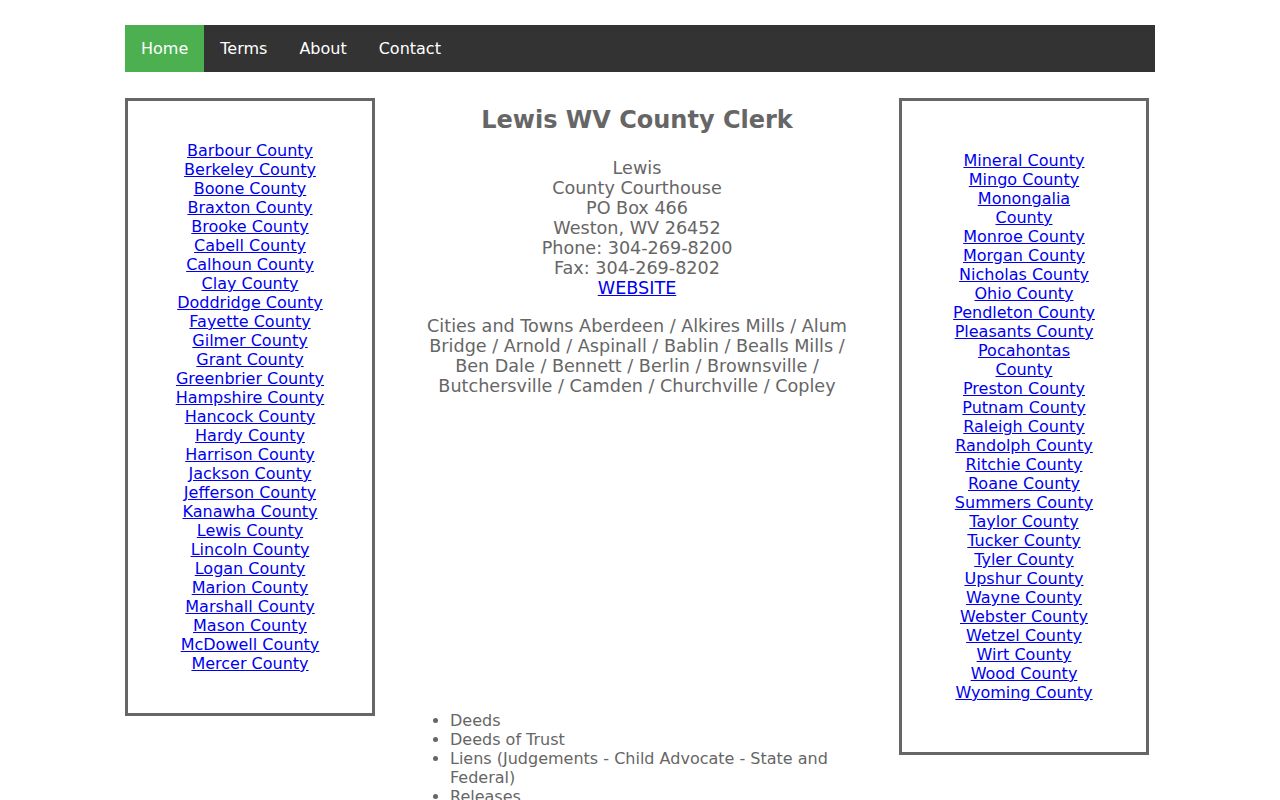
The Clerk's land-records page covers more than deeds. It lists deeds of trust, releases, liens, church trustees, cemetery deeds, assignments, agreements, affidavits, plats, and trustee reports of sale or foreclosure. That list helps you pick a likely record family. It stays silent on other counts. Nothing in it says which items are indexed through the online inquiry or how far each category reaches back. One more trap waits. A record may be filed under a party name that differs from the name now shown on the parcel card.
Review the Lewis County land-records category page for the instrument types the Clerk identifies.
Check Lewis County Deeds of Trust, Liens, and Releases
A parcel's history is rarely just conveyances. Financing documents and claims pile up too. A deed of trust usually means an interest in the property was pledged as security, not that ownership moved to the lender. A release or satisfaction may follow. Lewis County's categories include judgment and other liens. Search the parties and references with care, and inspect any associated release before assuming a debt is still open just because the original instrument appears in the index. Liens can name a person, a company, a trustee, or another party. The index never replaces the instrument. Its scope is what counts. A result that cites a court matter needs sorting. The court case record and the Clerk's land instrument are different things. The case file describes the dispute or judgment, while the land record preserves the instrument recorded against the real estate. Both can matter, yet neither alone answers every question about present status.
Follow Trustee Reports and Foreclosure Filings in Lewis County
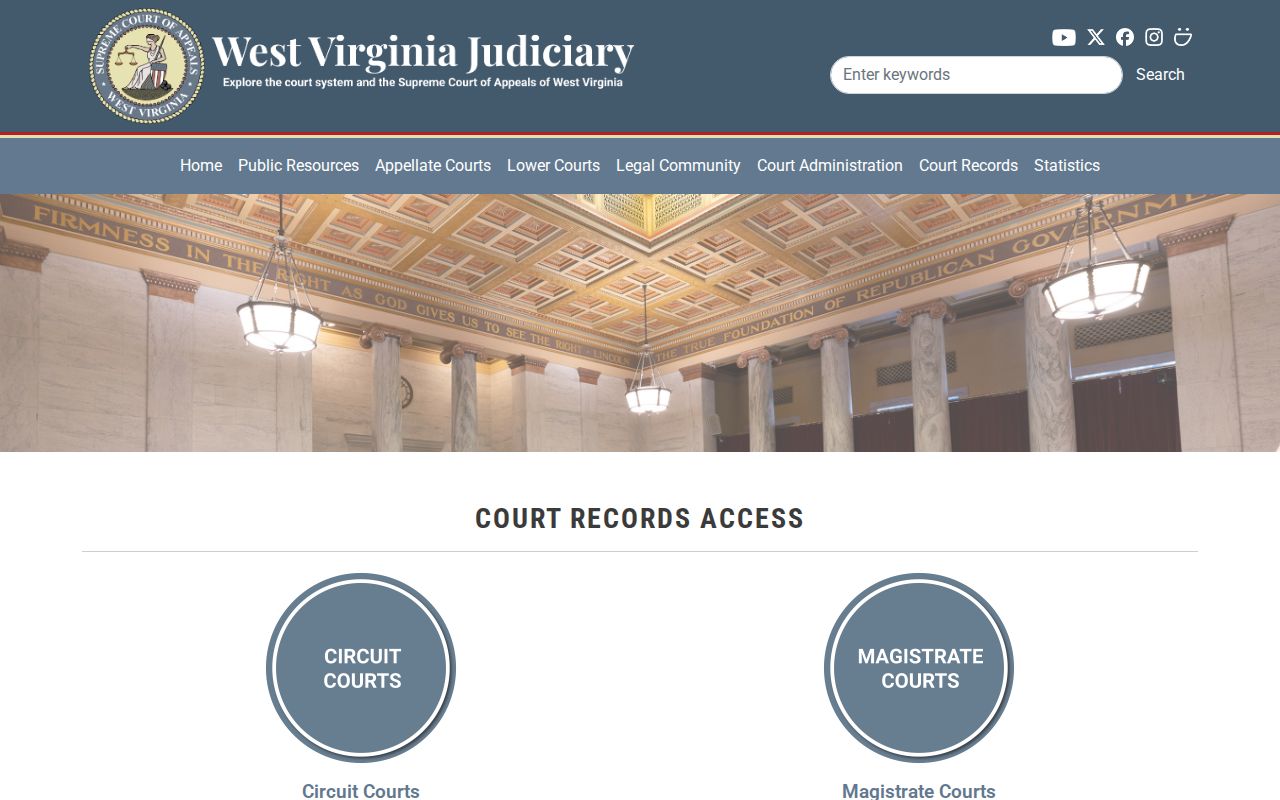
Trustee reports of sale and foreclosure filings sit among the county's land-record categories. They can explain a later owner-name change. Their presence proves no full procedural history. Nor does it settle the current balance of an obligation. Write down the trustee's name, the date, the parties, the property description, and any referenced deed of trust. Then hunt for the next deed. Compare its legal description to the parcel under review. West Virginia's court-record access page offers statewide court search entry points, but it is a separate system from the County Clerk's land-record index. A court entry is not a deed image. For a given case, use the case number or names and confirm with the court that holds the file.
See the West Virginia court-record access page for the state's circuit and magistrate search links.
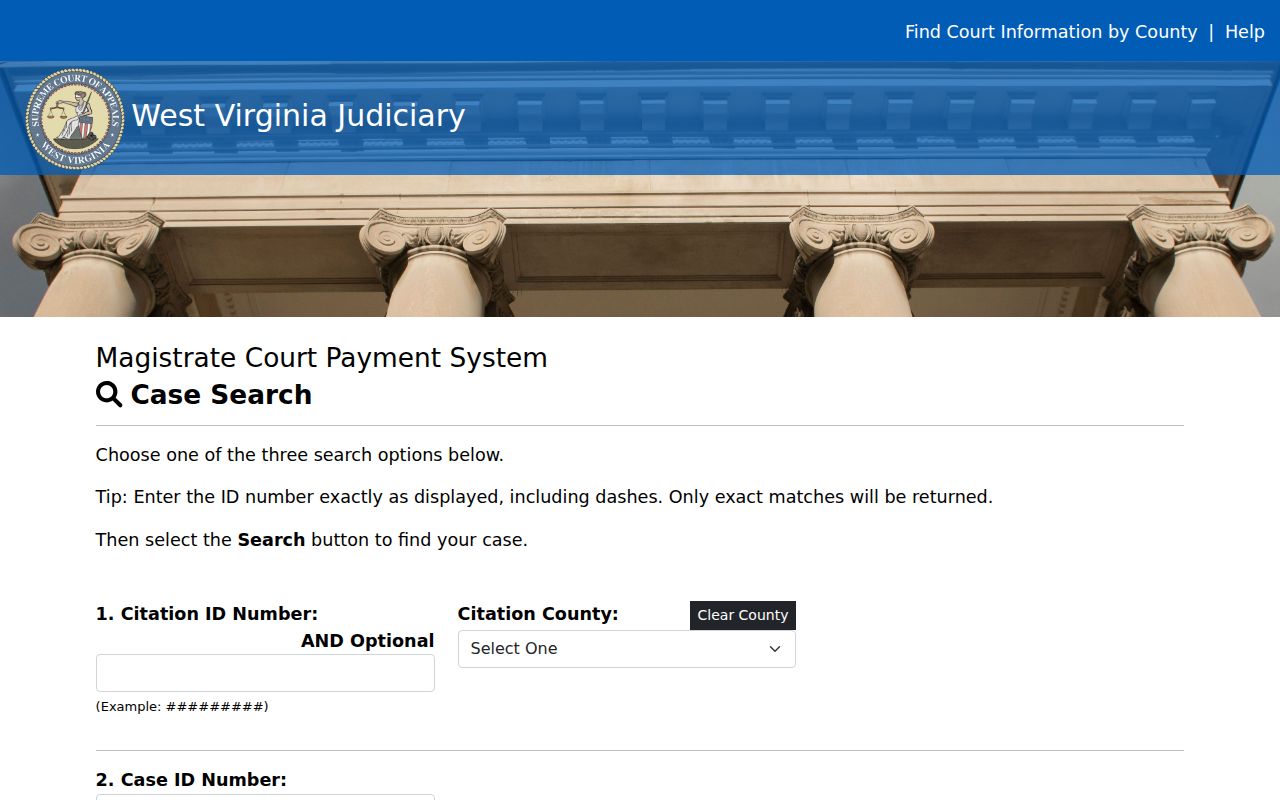
For magistrate cases, open West Virginia's magistrate search form.
Match a Lewis County Deed to Its Plat and Description
The property description ties a deed to land. It may cite a recorded plat, a lot, adjoining owners, or metes and bounds. The Clerk lists plats as a land-record category. When a deed points to a map, chase it. A subdivision name or street address alone may miss tracts included in the conveyance. Lay the deed beside the Assessor parcel card and the GIS map. A tax parcel boundary is not the legal description. One instrument may cover several current parcels. It may cover only part of a mapped parcel, or a right that never shows up as a separate surface parcel. Acreage, boundaries, and access rights deserve care. When they matter, review the recorded instrument and get professional surveying or title help as appropriate.
Search Lewis County Deeds Under Individual and Business Names
Names shift across a chain of title. A grantor may appear with a middle initial one year and plain initials the next. Estates and trustees create their own naming wrinkles. When a document hints at those capacities, search them all. For a company or limited liability company, keep the punctuation exact. Keep abbreviations exactly as the deed shows them too. If the index returns nothing, try a shortened version of the name. A business entity search can surface an official name and registered-agent details. That is useful context. It is not proof the entity owns a particular parcel.
The West Virginia Secretary of State offers both organization-name and advanced entity searches. Use those official tools to pin down the exact legal name. Then return to the County Clerk's index for the recorded land instrument itself. An entity detail page may show administrative facts. It never replaces the deed, assignment, or other county filing that actually identifies the property.
Ask About Older Lewis County Deed Books and Coverage
The county publishes no firm statement on where its online index begins or when imaging was converted. Researchers must guess when to move to the older deed books. So treat a full-looking online result with care. A chain that stops mid-stream may simply have crossed into older volumes. Those volumes live only at the office. Ask the Clerk which index volumes, deed books, or other records cover the missing stretch. Can those be searched remotely or only in person?
A 2014 West Virginia Attorney General opinion discussed a proposed privately funded digitization effort. It touched county property and mineral records. That old proposal proves nothing about present-day access. It does not show that every Lewis County record was digitized, that today's portal holds the same material, or that remote images exist now. Portal descriptions and the Clerk's own answers control the question.
When older material sits outside the portal, make a focused request. The West Virginia FOIA statute generally demands a response as soon as practicable and within five days. Weekends and legal holidays are excluded. An agency may charge actual reproduction costs. It may not bill for search or retrieval labor. Ask the office about its request and copy process. Narrow the date range, the parties, and the document type so staff can find the record fast.
Separate Surface Deeds From Lewis County Mineral Interests
A surface parcel map is not a mineral ownership map. Neither is an assessor card. West Virginia property interests can be split. A deed may reserve, convey, or refer to mineral rights apart from the surface. Pull the recorded documents themselves. Look for reservations, exceptions, leases, assignments, and references to earlier instruments. The name on the surface tax card proves nothing about who holds the minerals.
The County Clerk's category list spans ordinary land instruments and restricted military discharges alike. A discharge record is not a parcel ownership document. Access limits apply to it. Tie your search purpose to the record type. Follow the Clerk's instructions before requesting any protected material. Where a title question turns on a mineral reservation or a historic description, a professional title examination may be the only sound way to trace the separate chain.
Keep a Lewis County Deed Search Log
A tight search log pays for itself. It reveals a missing link quickly. It also helps you explain a request to the Clerk. For each promising result, record the searched name and spelling, the instrument type, and the recording date. Add the named parties, the parcel or legal description, the index reference, and any cited prior filing. Mark which entries you have read and which are only index hits. Keep separate notes for the assessor's tax parcel. Note the deed's legal description and any court case number too.
Never turn an incomplete search into a claim that an interest does not exist. Index coverage has limits. Name variations can hide a filing. Unrecorded or separately held rights may stay invisible in a deed search. For a wider chronology, pair the former-owner guide with the documents themselves. Confirm material conclusions with the public office or a qualified title professional.
The Lewis County Grantor-Grantee Index
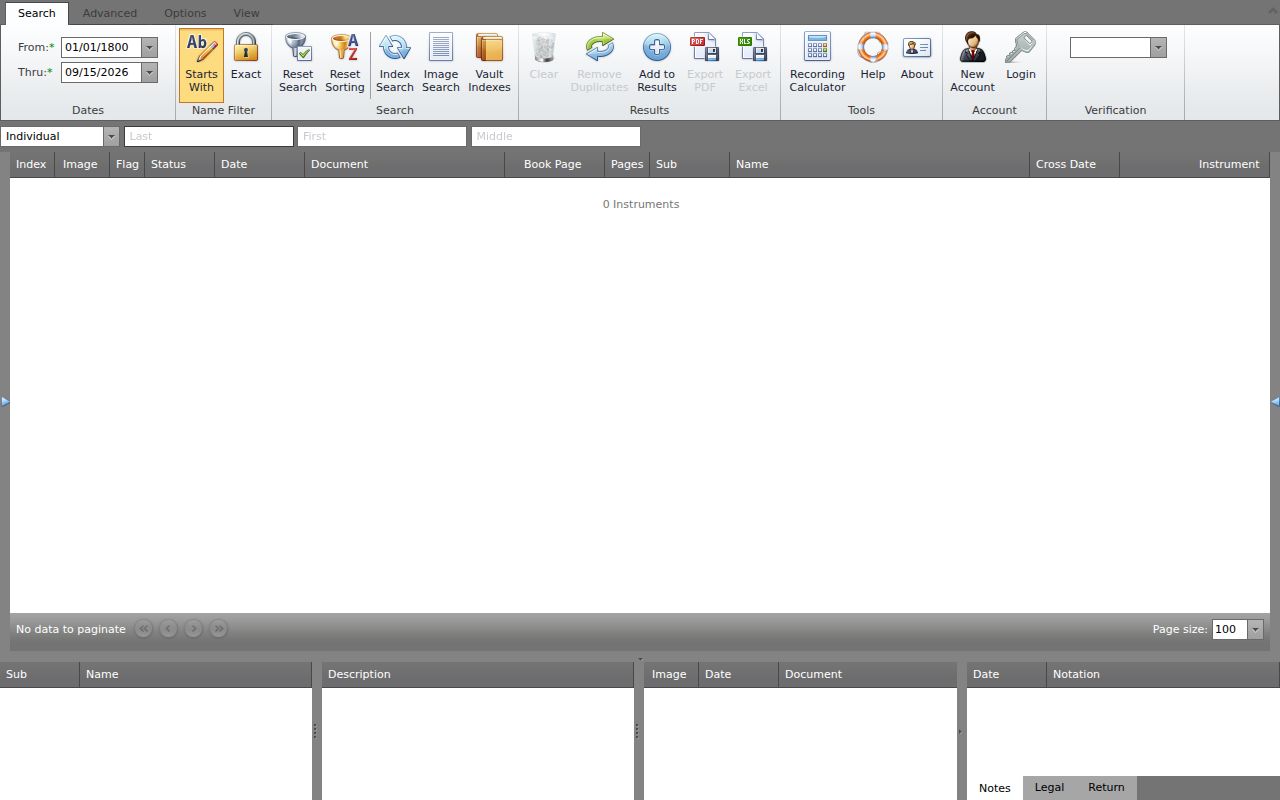
The Lewis County online land-record inquiry is the practical first stop for a recent name or document search. The county does not spell out its exact search fields, earliest indexed year, image cutover, or fee schedule. Treat any step-by-step method, then, as a cautious chain-of-title approach rather than a promise that each screen control exists. Search name variations and check the instrument itself. Index entries can be abbreviated. A parcel may also appear under a prior owner. It can also show an estate, a trustee, or a business name.
For a view of the county's online land-record entry point, open the Lewis County inquiry portal.
- Start with the current parcel owner shown on the Assessor record and search that exact name in the Clerk's index.
- Locate a likely deed where the person or entity appears as grantee; compare the legal description and recording date with the parcel you are researching.
- Read the deed to identify the grantor and any prior instrument reference, then search the grantor as a prior grantee.
- Repeat backward, recording each date, party, document reference, and description. Ask the Clerk whether older volumes or an in-person search are needed.
- Grantor
- The party named as conveying an interest in the instrument.
- Grantee
- The party named as receiving that interest.
- Chain of title
- The sequence of recorded transfers that appears to connect prior owners to a current interest.
- Document reference
- The index's identifier for retrieving an instrument; ask the Clerk which reference details are needed for a copy.
Getting a Copy of a Lewis County Deed
When an index result looks relevant, stop and note the details. Record its parties, date, document type, and displayed reference before asking for a copy. The public sources are silent on whether the portal delivers a full image, and they say nothing about online ordering. It is unclear whether certified copies can be ordered online, and copying and certification charges are not stated either. Contact the County Clerk at 110 Center Avenue, Weston, WV 26452, or 304-269-8215, for the correct request procedure. If you visit or write, give staff enough identifying detail to separate the instrument from similarly named filings. Probate matters run by appointment. Call ahead if an estate record sits in your title trail.
Recorded, not guaranteed. An index search describes filings found in the record; it is not a title opinion and cannot prove that no other interest exists. Use a qualified title professional for a complete title examination.